


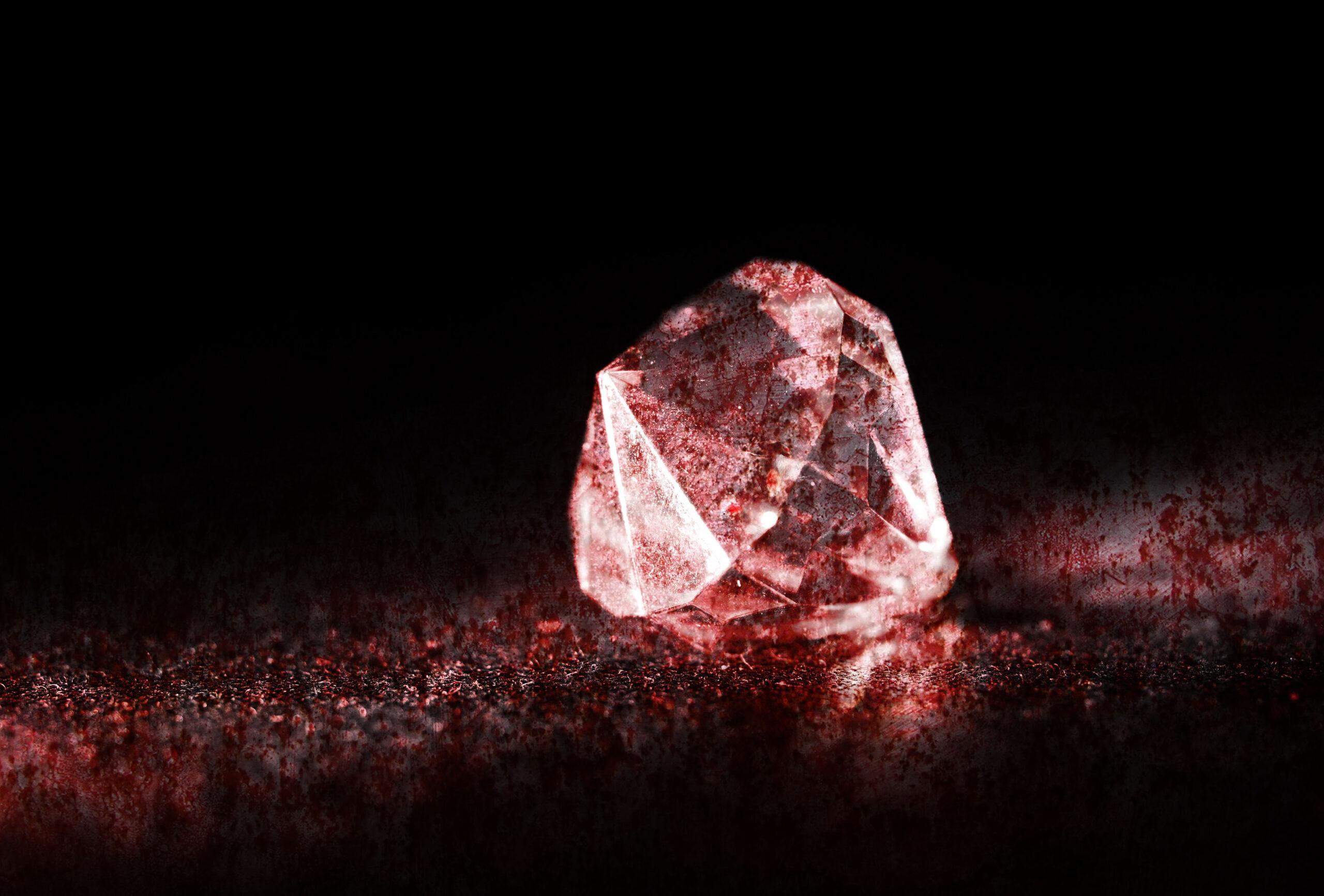
This is how the joke goes.
The waste-picker girl named Issa meticulously searches through the discarded paper, plastic, and metal in the landfill on the outskirts of Bangui. Her friend, Hadja, silently approaches from behind — well, as silently as bare feet landing on plastic and sharp metal edges allow — and asks Issa what she’s looking for.
“Diamonds,” Issa shrugs.
Her friend is confused: “Here, in the landfill?” Hadja’s hand points at a broken mobile phone case. “Shouldn’t you be digging the mines in the forest for those?”
“That’s where they killed my father and still slaughter any Muslim who wanders close to the mine,” Issa says, still rifling through the waste. “It’s safer to look for diamonds in the landfill.”
End of joke. Now is when you laugh.
Oh! Did you already hear a different variation of that joke? With a drunkard looking for a lost key under the streetlight because it was too dark in the nearby park where he had dropped it?
Too bad they stole my joke.
Okay. In that case, let me extend this one a bit. Maybe even further than just a bit. You see, today, I’m determined to make you laugh.
Today, Issa finds a diamond in the waste.
A roughly cut, sparkly thing no bigger than a wood ant creeps onto her hand. And bite it does, right into Issa’s money line on the palm.
“Found one!” She raises it to the sun for her friend to see.
Hadja takes a closer look, shakes her head, and smiles. “That one’s a broken shard of glass and no more.”
“You know nothing,” Issa says. “Look how the sun’s broken into a thousand fragments inside it. I’m gonna be rich!”
Issa gets up, doesn’t bother to fill her sack with sifted wastes for selling. Today, she only puts the diamond on her left hand and closes her palm around it. Then, Issa walks.
“I have to go.” She waves at her friend.
The streets are filled with drunkards and stoned men lazing near the gutters, merchants selling vegetables, casual passersby, and four-wheelers mostly belonging to the Russians. Issa with a diamond hidden in her fist draws lots of attention. She frets. But in truth, the male gaze is nothing new, thanks to the many tears in the gown she wears. It does a poorer job of covering her than her palm does of hiding the diamond.
She walks fast.
Back at her hut, she doesn’t step inside where her ailing mother sleeps. Instead, she sits on the three-legged chair reclined against the brick and mortar wall. She looks at her sealed fist, smiles, and plots her next move, until a siesta takes her in. Her left fist remains closed even as she sleeps.
She wakes to a loud rumble. There’s a Russian man on the muddy road, his hands clasping a fat rope slung over his shoulder. Behind him, he drags a large two-storied house with potted plants on the balcony. He steps up to Issa, lets go of the rope, wipes the sweat off his brow and says, “A mansion for your diamond.”
It’s uttered less like a vase for your flowers and more like a penny for your thoughts.
Issa ponders the deal. The mansion appears tempting indeed, but what will she and her ailing mother do in such a big house? And her diamond will be gone too. That doesn’t sound fair.
“No deal,” she says, and her left fist remains closed.
The Russian sighs and leaves. Issa spends the rest of the day and the next morning doing her usual chores, but only with her right hand. The left fist offers support and hope.
In the afternoon, a rumble wakes her from her siesta once again. Today, the Russian drags a school behind him with classes ongoing. African teenagers like her are sitting on the benches, and a teacher chalks something on the board.
“A school for your diamond,” the Russian says.
Issa wonders. She’s always wanted to return to school. Wouldn’t it be nice to have one of her own? She could be a student and the principal simultaneously. No one could throw her out. But then, Issa thinks, wouldn’t having a few books and regular lessons suffice? What does she need an entire school for? And her diamond would be gone too.
“No deal,” she says and the Russian sighs and leaves.
Now, we approach the actual joke. Pay attention.
The Russian returns the next afternoon, but it’s not the characteristic rumble that wakes Issa out of her siesta. His familiar voice awakens her.
“How about this one?” he asks. “I chose it especially for you.”
Issa rubs her eyes with her right hand and gets up. The Russian is not carrying a rope with him today, nor is he dragging a big structure. Instead, he holds a hanger in front of him. A peachy yellow gown with a bright orange belt captivates her. Starting below the waist are three layers covered in floral patterns in red, blue, and brown. The flowers smell of dreams.
Issa steps closer to the gown. It’s the perfect size, but she has something else on her mind. She checks the gown for tears. No, it has none and will do a good job of covering all of her.
“A dress for your diamond,” the Russian says.
And Issa nods. The gown is indeed worth a diamond.
“You’ve got a deal,” she says and opens her left fist for the first time in three days.
The diamond kept in captivity hasn’t been kind to her. Her entire palm, including the diamond, is covered in blood.
“Oh no!” she says. “The diamond’s bloodied. Will you still take it?”
The Russian laughs: “You must be joking!” He picks the diamond off her palm. His eyes twinkle. “That’s the best kind.”

Leave a Reply